
The screen is no longer a window we merely observe. It has become a landscape we inhabit. As we navigate the year 2026, the historical definition of synchronization: the harmonious marriage of moving image and recorded sound: has undergone a radical metamorphosis. For decades, the pinnacle of a composer’s ambition was the silver screen or the prime-time television slot. These were the cathedrals of consumption, where a single placement could define a career. But today, the architecture of our attention has fractured.
We find ourselves in an era where the "traditional" sync deal: the slow, deliberate negotiation for a thirty-second spot on a network broadcast: feels increasingly like a relic of a more linear age. In its place, a complex, high-velocity ecosystem has emerged, spanning interactive virtual worlds, hyper-targeted social feeds, and augmented realities. The question is no longer whether traditional sync matters, but whether our current systems are agile enough to survive the exaltation of the interactive.
The Interactive Pulse: Music for Video Games

If the 20th century belonged to the director, the 21st belongs to the player. Music for video games has transitioned from a supporting role to a foundational element of the narrative experience. Unlike the static scores of traditional cinema, modern gaming demands a modularity that mimics life itself. We are seeing a shift toward adaptive soundtracks: audio that breathes, reacts, and evolves in real-time based on a user’s heartbeat, their movement through a digital forest, or the intensity of a networked battle.
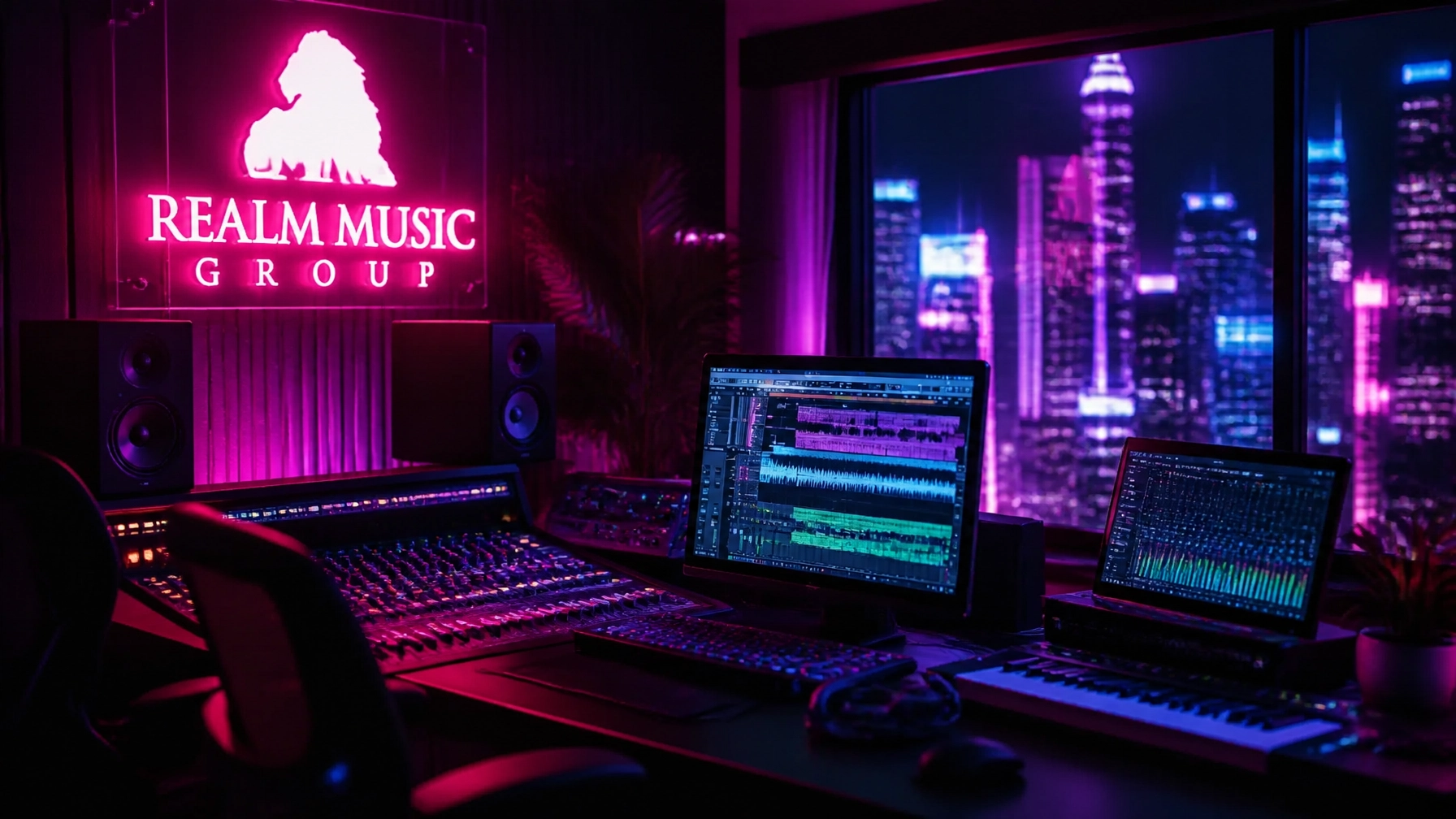
This evolution has fundamentally altered the nature of sync licensing. A single, immutable stereo file is often insufficient for the needs of a 2026 developer. They require stems, loops, and layers that can be disassembled and reconfigured by sophisticated AI-driven audio engines. We observe a trend where "licensing" a song is less about the song itself and more about licensing the possibility of the song. At Realm Music Group, we have anticipated this shift by ensuring our catalog is not just a collection of tracks, but a repository of creative assets, fully documented and ready for technical implementation.
The Immersive Frontier: VR and the Metaverse
The sensory experience of the modern era is one of total immersion. As VR and AR technologies reach a state of mass-market refinement, the demand for music that can exist within a three-dimensional space has exploded. This is not merely about background noise; it is about spatialized soundscapes that provide a sense of place. When a user enters a virtual jazz club or an augmented retail space, the music must behave with the same physics as the real world.
Historically, licensing for these "metaverse" experiences was a legal thicket: an impenetrable maze of territory rights and platform-specific restrictions. In 2026, the industry is moving toward a standardization of "future-proof" rights. We are moving away from the narrow, project-specific licenses of the past toward broader, global permissions that allow a piece of music to live across any device a user might choose to wear. The challenge for the modern artist is to maintain creative freedom while ensuring their work remains accessible to these high-growth platforms.
The Velocity of Social: Micro-Sync and the Creator Economy

While the prestige of music licensing for film remains undeniable, the sheer volume of consumption has shifted toward the "micro-sync." Every day, millions of creators on platforms like TikTok and Instagram require high-quality, fully cleared music to soundtrack their fleeting, yet culturally significant, moments. In this world, speed is the only currency that matters.
A music supervisor working on a global brand campaign can no longer afford to wait weeks for a clearing house to track down a dozen disparate rights holders. The fragmentation of publishing and master ownership has become the primary friction point in modern licensing. We see a world where the brilliance of a track is often overshadowed by the complexity of its paperwork. This is where the industry must choose: evolve toward radical simplicity or risk obsolescence in the face of automated, AI-generated alternatives.
The 200% Remedy: Simplicity as Sophistication

At the heart of the friction in 2026 is the ghost of traditional licensing: the "split." For too long, the industry has accepted a status quo where a single song might have six different writers, three publishers, and two labels, all of whom must sign off before a single note can be used. This is an impenetrable barrier to the high-velocity needs of modern media.
This is why we champion the "200% Ownership" model. At Realm Music Group, we control both the master and the publishing for every track in our eclectic catalog. Whether it is a pulse-pounding Latin Pop track for a gaming trailer or a soulful R&B piece for a high-end luxury advertisement, our clients deal with a single entity. We have removed the middleman, the delays, and the legal ambiguity.
In an age of "layers of abstraction," there is a quiet authority in direct ownership. It provides a level of certainty that is rare in the creative arts. When a music supervisor visits our Sync Portal, they are not just browsing sounds; they are accessing a promise of instant clearance. This is not just a business strategy; it is an act of empowerment for the independent artists we represent. By retaining control, they are able to participate in the most lucrative and fast-moving sectors of the economy without sacrificing their long-term rights.
The Human Element in a Digital Age

As we look toward the horizon of the late 2020s, the specter of AI-generated music looms large. It is easy to imagine a future where the human touch is replaced by the efficiency of the algorithm. However, we believe that the more automated our world becomes, the more we will crave the authentic, the imperfect, and the soulful. There is a specific exaltation found in a live-recorded saxophone, the grit of a real guitar, and the raw emotion of a human voice that a machine cannot yet replicate.
Traditional sync licensing does still matter in 2026, but only if it serves the needs of the modern creator. It matters when it facilitates a connection between a visionary filmmaker and a brilliant musician. It matters when it allows an independent artist to fund their next studio production. And it matters most when it is handled with the respect and speed that the digital era demands.
We invite you to explore the future of sound with us. Whether you are a filmmaker seeking the perfect emotional resonance or an artist looking to reclaim your destiny, the path forward is clear. The screen may have changed, but the power of a perfect song remains absolute.